
GOAL OF THIS ARTICLE:
To teach how defensive trading tactics can transform potential losing trades into profitable ones, using real case studies and metrics.
WHO THIS IS IDEAL FOR:
Options traders who want to protect their capital, avoid unnecessary losses, and learn how to manage trades more strategically rather than closing them at a loss.
At Traders Reserve, we don’t shy away from tough trades—we embrace them. This week inside Income Masters, I walked through one of the most important tactics every options trader needs: defensive adjustments.
Why? Because credit spreads may be defined-risk trades, but left alone, losses can snowball quickly. Our job is to reduce those risks, buy more time, and—even better—turn potential losers into winners.
Why Defense Matters
When a trade moves against us, we have choices. We can cut it, reset it, or manage it. Most of the time, we choose management, and here’s why:
Defending early reduces losses, improves probability, and—if we can add credit along the way—it actually gives us more room to maneuver. This combination of time + credit is what keeps us in trades long enough to capture recovery.
The Tools of Defense
We don’t just sit back and hope. We use specific tactics:
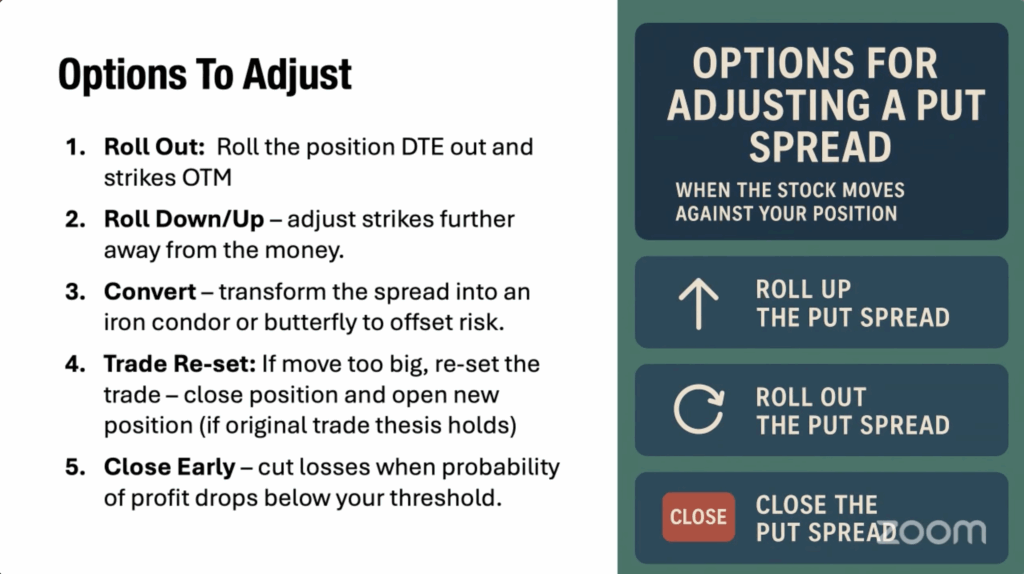
These include:
Rolling out in time and strikes.
Rolling up or down depending on whether it’s a call or put spread.
Converting to iron condors or butterflies to offset risk.
Resetting the trade when the move invalidates the original thesis.
Cutting losses early (rare, but sometimes necessary).
These tools aren’t about “saving face”—they’re about protecting capital and keeping the probabilities stacked in our favor.
The Costco Case Study
Let’s put this into perspective. Earlier this year, we found ourselves in a challenging Costco trade. After 8 adjustments and nearly 4 months, we finally closed it… for a $390 profit.
On paper, that trade once carried a potential $2,850 loss. But by defending instead of quitting, we not only avoided that loss—we turned it into a positive 7.5% return.
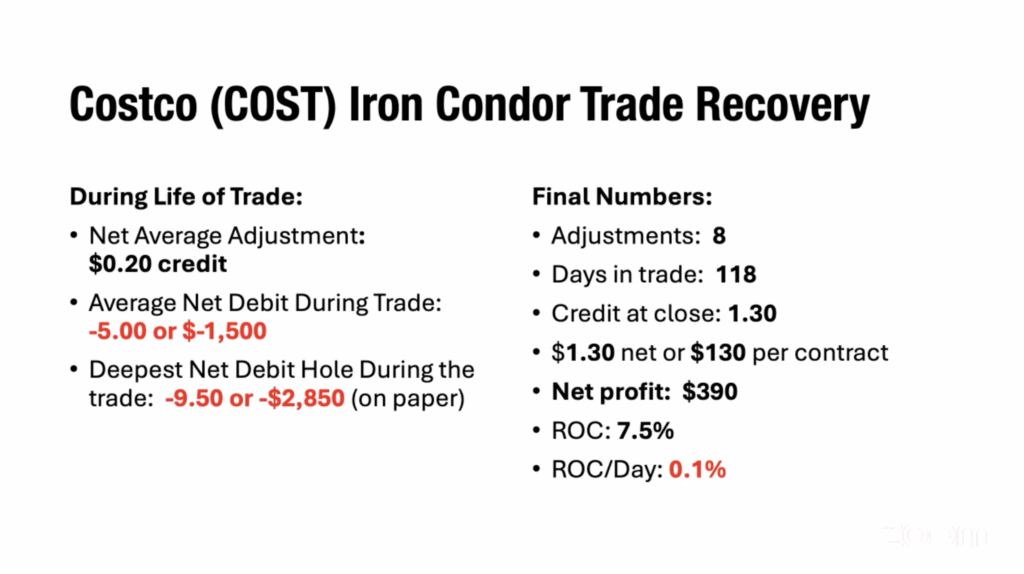
Sure, the daily return was small (0.1%), but that’s the trade-off: we bought time, worked the position, and walked away green.
The Numbers Don’t Lie
Since July:
43 trades opened, 33 closed profitably.
Zero closed losses.
Average return on capital: 11.7% in just two months.
Defended trades take longer—34 to 50 days versus 13 days on average—but they’re still paying off. Our adjusted trades have added more than $2,800 in profits this year.
Where We Stand Now
We’re currently working through defenses in Vertiv, CRM, CEG, Meta, and Lululemon. Some are close to closing profitably, others may need more time. That’s part of the process—trading isn’t about instant gratification, it’s about staying consistent.
The truth? Adjusting trades can feel slow and sometimes painful. But it’s this discipline that separates pros from amateurs.
Final Takeaway
Defense is not weakness—it’s strategy. By managing instead of surrendering, we not only protect capital but often squeeze profits from trades that looked hopeless.
And that’s why we’ll keep rolling, keep adjusting, and keep teaching you how to turn losing trades into winners inside Income Masters.
Watch The Full Deep Dive Here:
YOUR NEXT RECOMMENDED TRAINING:
Mastering Price Action: A Trader’s Guide to Reading the Market